Your CPAP humidifier has two or three settings most people never touch: the humidity level, the tube temperature, and the choice between automatic and manual control. Left on the factory defaults, they work well enough for many users. Adjusted for your mask, your bedroom, and the season, they are the difference between waking up dry or damp and waking up comfortable. This guide explains what each CPAP humidifier setting does, what the numbers mean on ResMed, Philips Respironics, and Fisher & Paykel machines, and how to change them one step at a time.
Nothing here changes your therapy. Humidity and temperature are comfort settings, separate from the pressure your doctor prescribed, and every machine lets you adjust them yourself. If you are new to all of this, read our CPAP humidifier guide first; it covers what a humidifier is and why most Canadian prescriptions include one.
What the Humidifier Settings Control
A heated humidifier is a small water chamber with a heating plate underneath. Air from the machine passes over the warm water, picks up moisture, and travels through the hose to your mask. Two things decide how that air feels when it arrives:
- Humidity level sets how hot the heating plate runs. A higher number means warmer water, more evaporation, and more moisture in the air.
- Tube temperature (only with a heated hose) sets how warm the inside of the tube is kept. Warm air holds its moisture; air that cools on the way to the mask drops it as water. That water is called rainout.
The two work together. Humidity decides how much moisture goes in; tube temperature decides how much of it reaches you as vapour rather than droplets. HealthLink BC advises setting the machine to deliver warmer or wetter air when CPAP leaves your nose or mouth dry, which is exactly what these two settings do.
Auto vs Manual: Which Should You Use?
Most machines sold in Canada since 2015 offer an automatic mode. ResMed calls it Climate Control Auto; Philips Respironics calls it Adaptive; Fisher & Paykel builds it into the SleepStyle without a separate name. In Auto, the machine measures the air coming out of the chamber and the room around it, then adjusts humidity and tube temperature together to hold a steady, comfortable target. On ResMed machines Auto is preset to a tube temperature of 27 °C and 85 percent relative humidity, and it adjusts the humidifier to hold that as the room changes.
Auto suits most people most of the year. It needs a heated hose to work (without one, the machine can only control humidity), and it asks nothing of you. Manual is for when Auto is not solving a specific problem: you are still dry at the default, or you get rainout when the bedroom is cold, or you want a cooler air stream than Auto delivers. In Manual you set humidity and tube temperature yourself and the machine holds them.
A good rule: run Auto for the first month. If you are comfortable, leave it. If not, switch to Manual with the fixes below, and change one thing at a time.
The Settings by Machine Brand
Each manufacturer uses its own scale, which is why advice from a friend on a different machine rarely transfers. Here is what the numbers mean on the machines we sell most.
| Machine | Humidity scale | Default | Tube temperature | Auto mode |
|---|---|---|---|---|
| ResMed AirSense 10 / AirSense 11 | Off, 1 to 8 | 4 | 16 to 30 °C with ClimateLineAir hose | Climate Control Auto |
| ResMed AirCurve 10 / 11 | Off, 1 to 8 | 4 | 16 to 30 °C with ClimateLineAir hose | Climate Control Auto |
| Philips DreamStation / DreamStation 2 | Off, 1 to 5 | Set by provider | Off, 1 to 5 with heated tube | Adaptive (Heated Tube mode with heated hose) |
| Fisher & Paykel SleepStyle | Off, 1 to 7 | 5 | Managed by the machine | Built in |
| ResMed AirMini (travel) | No water chamber | n/a | n/a | Uses HumidX insert |
Figures are from the manufacturer user guides. Your machine may show the menu slightly differently depending on firmware.
ResMed AirSense 10 and 11
From the home screen, open My Options. You will see Climate Ctrl (Auto or Manual), Humidity Level (1 to 8), and, if a ClimateLineAir hose is connected, Tube Temp (16 to 30 °C). In Auto you can still change Tube Temp if the air feels too warm or too cool; Humidity Level is managed for you and only becomes editable when you switch Climate Ctrl to Manual. On the AirSense 11 the same options sit under the Settings icon on the touchscreen.
Philips Respironics DreamStation and DreamStation 2
On the original DreamStation, turn the dial to My Setup; on the DreamStation 2, tap the humidification icon or open Settings. Humidifier runs Off or 1 to 5. With a heated tube connected, a Tube Temperature setting of Off or 1 to 5 appears as well, and the machine switches itself into Heated Tube mode. Without a heated tube, the humidification mode is Fixed (constant heater plate) or Adaptive (adjusts to the room to avoid condensation); your provider sets which, and Adaptive is the usual choice.
Fisher & Paykel SleepStyle
Press the humidity button on the front and use the dial to set 1 to 7; the default is 5. The SleepStyle manages tube temperature through its ThermoSmart hose automatically, so there is no separate tube setting to adjust.
Fix 1: You Wake Up Dry
If your nose, mouth, or throat is dry in the morning, the air needs more moisture or you need to stop it escaping.
- Confirm the humidifier is on and the chamber has water. It sounds obvious, but a chamber that empties by 3 a.m. gives you dry air for the rest of the night.
- If you are on Auto, switch to Manual and raise Humidity by one step. Leave it three nights.
- Still dry? Raise humidity one more step. If you reach the top of the scale and you are still dry, stop. More humidity will only produce rainout. The problem is leak.
- Check for mouth breathing or a mask leak. Air escaping through your lips or around the cushion takes the moisture with it, and no setting can compensate. Our guide to CPAP dry mouth walks through the fixes: chin strap, full face mask, cushion replacement.
If you do not own a heated hose, that is the upgrade that changes the most. Without one, high humidity settings fill the tube with water; with one, you can run the moisture you need. The ResMed ClimateLineAir 11 fits the AirSense 11, the ClimateLineAir for the AirSense 10 is the match for that machine, and the DreamStation heated tubing covers Philips machines.
Fix 2: Water in the Hose or Mask (Rainout)

Gurgling in the tube, a wet face, or a puddle in the mask means humidified air cooled on the way to you. The water is harmless, but it is unpleasant and it tells you the balance is off.
- Raise Tube Temperature by one step (or 1 °C on ResMed). Warmer tube, less condensation. Give it three nights.
- If you have no heated hose, lower Humidity by one step instead, and run the hose under the blanket so room air cannot chill it. A tubing wrap does the same job.
- Move the machine lower than your head if you can. Water that forms then drains back to the chamber rather than into the mask.
- Check the bedroom temperature. Rainout is far more common in a cold room in winter. Warming the room by a degree or two often fixes it without touching the machine.
Fix 3: The Air Feels Too Warm or Stuffy
Some people, especially those new to therapy, women experiencing hot flashes, and full face mask users, find the default air too warm. Lower Tube Temperature first, one step at a time, and keep the humidity where it is. If the air is still too warm with the tube at its lowest, lower humidity a step. Cooler air is easier to fall asleep with; the trade-off is slightly less moisture, so watch for dryness creeping back.
Seasonal Adjustments in Canada

Canadian homes swing from very dry in winter to humid in summer, and the right setting swings with them. Health Canada’s guidance on portable humidifiers suggests measuring your indoor humidity with a hygrometer and keeping it near 30 percent in winter and around 50 percent in summer; furnace-heated Canadian homes often sit below that winter figure for months. Air that dry irritates the nose and throat on its own, before the CPAP airflow adds to it.
- Winter: expect to raise humidity one or two steps above your summer setting, and raise tube temperature to match so the extra moisture does not condense in a cold bedroom. Many users also run a room humidifier; if you do, empty and clean it regularly, since a cool-mist unit does not boil its water and can spread bacteria if left sitting.
- Summer: air conditioning dries indoor air less than furnace heat does, so most people lower humidity a step or two. If the room is warm, lower the tube temperature too; warm air in a warm room feels stuffy.
- Shoulder seasons: Auto handles the swings better than any fixed setting. If you are on Manual, revisit your numbers when you turn the furnace on and off.
Our cleaning and maintenance guide covers chamber care through the seasons, and why distilled water matters explains what to put in the chamber.
Travel Machines Without a Water Chamber
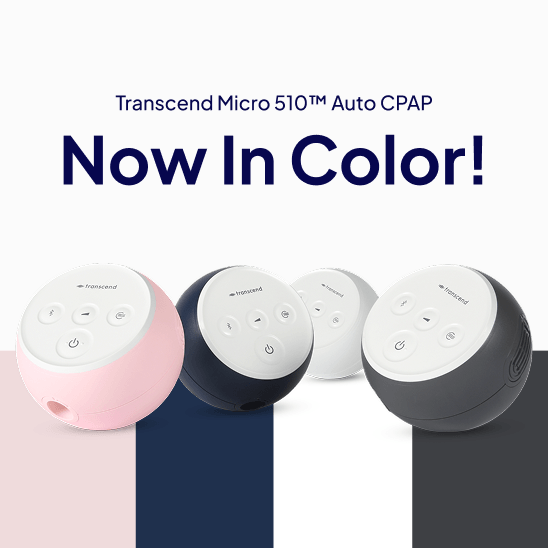
The ResMed AirMini and the Transcend Micro have no humidifier settings because they have no water chamber. They use a heat and moisture exchanger, a small insert that captures warmth and moisture from your exhaled breath and returns it on the next inhale. On the AirMini it is the HumidX (standard or Plus for dry climates); on the Transcend it is the AirMist HME. There is nothing to adjust; if you are dry, switch to the higher-output insert. Our guide on using CPAP without water covers the trade-offs.
Settings That Do Not Fix Dryness
Three things people change hoping for relief, which do not help: pressure (a prescription setting, not a comfort one, and it does not change moisture), ramp (affects how pressure rises at the start of the night, not humidity), and EPR or Flex (exhale relief, unrelated to air moisture). If you have adjusted humidity and tube temperature and you are still dry, the answer is almost always leak, and the fix is at the mask, not the machine. Our mask fit guide is the next read.
UNLOCK OUR BEST OFFERS!
Get up to 40% off machines, masks and accessories only when you sign up!
Sign Up Free →Frequently Asked Questions About CPAP Humidifier Settings
What is the best CPAP humidifier setting?
There is no single best setting. Start with Auto, or the default your provider set (4 on ResMed, 5 on SleepStyle), and adjust one step at a time: up for dryness, down for rainout. The right CPAP humidifier settings depend on your mask type, your bedroom temperature, and the season, so expect to revisit them twice a year.
Do CPAP humidifier settings change my pressure?
No. Humidity and tube temperature are comfort settings and do not affect the pressure your machine delivers or the data your doctor reviews. You can adjust them yourself at any time. Pressure is a prescription setting; changing it needs a conversation with your sleep physician.
Should I use Auto or Manual humidification?
Use Auto if your machine has it and you own a heated hose; it adjusts for the room every night. Switch to Manual only when Auto leaves you dry or damp, then change one setting at a time and give it three nights. Most people who try Manual to fix a problem go back to Auto once the season changes.
Why is my mouth still dry with the humidifier on high?
Because the moisture is escaping before it reaches you. Mouth breathing on a nasal mask, or a leak around the cushion, carries the humidified air away. Turning the setting higher produces rainout, not relief. Fix the leak with a chin strap, a full face mask, or a new cushion, then lower the humidity back to normal.
What tube temperature should I set my CPAP to?
On ResMed machines the Auto target is around 27 °C, and most people are comfortable between 24 and 28 °C. Set it high enough that no water forms in the hose and low enough that the air does not feel stuffy. If you are getting rainout, raise it one degree; if the air feels too warm, lower it one degree.
Do I need to change CPAP humidifier settings in winter?
Usually, yes. Canadian indoor air in winter is often near 30 percent humidity, so most users raise humidity one or two steps and raise the tube temperature to match. In summer, lower both. If you run Auto with a heated hose, the machine handles most of the change for you.
Can I run my CPAP with the humidifier off?
Yes. The machine delivers the same pressure with the humidifier off or the chamber empty. Some people prefer it in humid summer weather. If you turn it off and wake up dry or congested, turn it back on at a low setting rather than abandoning it.
The parts that make the settings work
A heated hose for Auto mode and rainout control, a fresh water chamber when yours is cloudy, and waterless humidification for travel. No prescription required; orders over $150 ship free across Canada.


Browse all CPAP humidifiers and chambers or CPAP tubing.
Final Thoughts on CPAP Humidifier Settings
The settings are simpler than the menus make them look. Humidity adds moisture; tube temperature keeps it from turning into water; Auto balances the two for you. Dry means up one step, wet means tube temperature up or humidity down, and anything beyond the top of the scale means the problem is a leak, not the humidifier. Give every change three nights before you judge it.
If you are not sure which machine you have, which hose fits it, or whether your settings make sense for your mask, call us. We will walk through the menu with you on the phone. Reach us at 1-855-492-3316 or [email protected], seven days a week from 9 AM to 9 PM. Orders over $150 ship free anywhere in Canada.
This guide is here for general information and is not a substitute for medical advice. Humidity and temperature are comfort settings you may adjust yourself; pressure and therapy mode are prescription settings. Talk to your doctor or sleep specialist about any symptom that persists.