Knowing how to clean a CPAP machine comes down to three steps: a two-minute job every morning, a ten-minute job once a week, and a quick inspection once a month. This guide lays out each one, explains what you need (warm water and mild soap cover the basics), which tools make the routine faster if you would rather not scrub, which gadgets to skip, and how often each part should be replaced rather than cleaned, using the same schedule Canadian insurers and our own supplies pages work from.
One change makes the whole routine easier: do it in the morning, not at bedtime. Parts washed after breakfast are dry by evening, which means no damp cushion on your face, no water sitting in the hose, and no temptation to skip the wash because you are tired. Canadian winters add a second reason to keep up with it. Dry indoor air means most people run their humidifier higher from November to March. More humidity means faster mineral build-up in the chamber and more condensation in the tube, so the weekly chamber soak and hose dry-out matter most in winter.
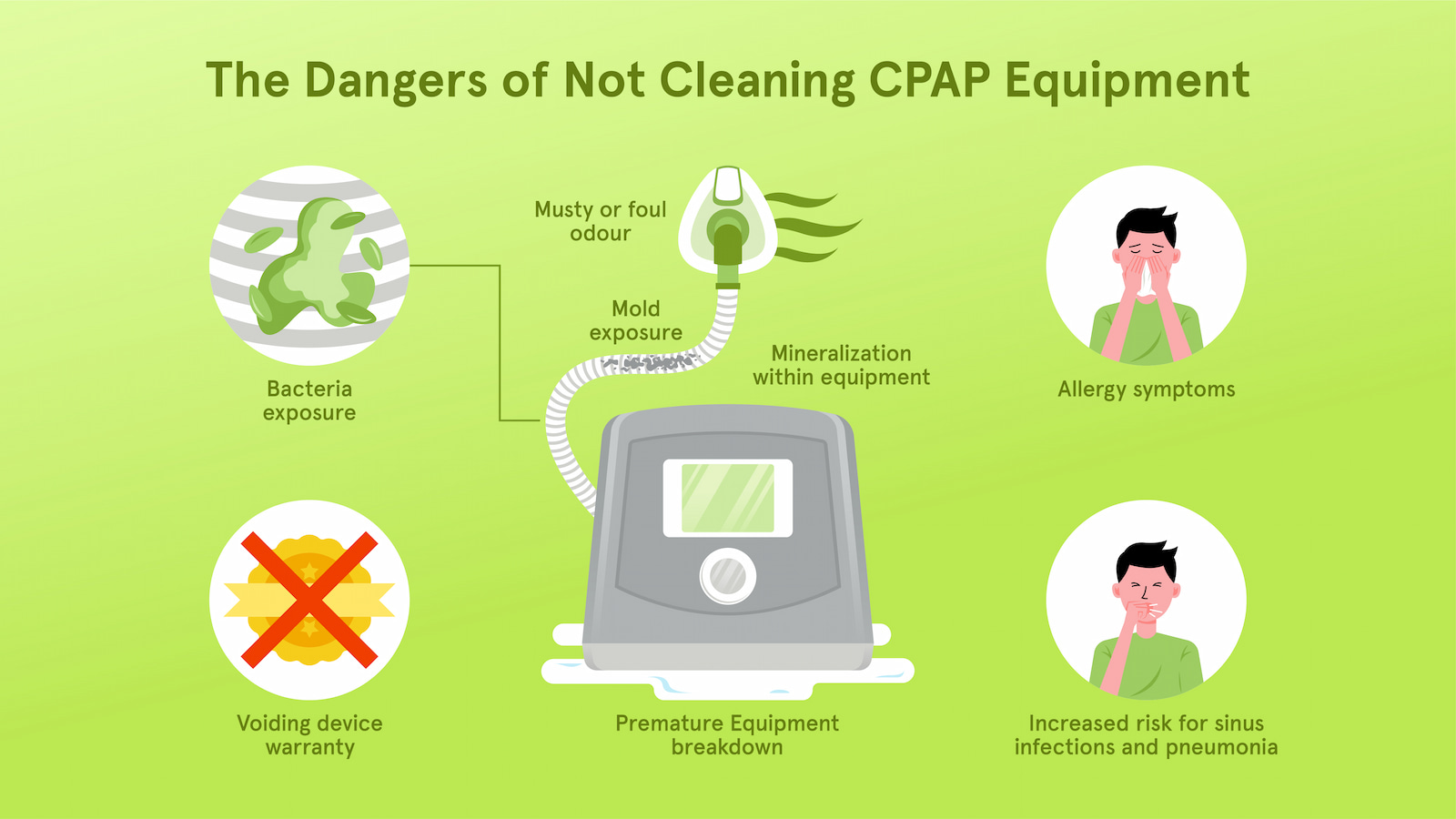
Why You Need to Clean a CPAP Machine
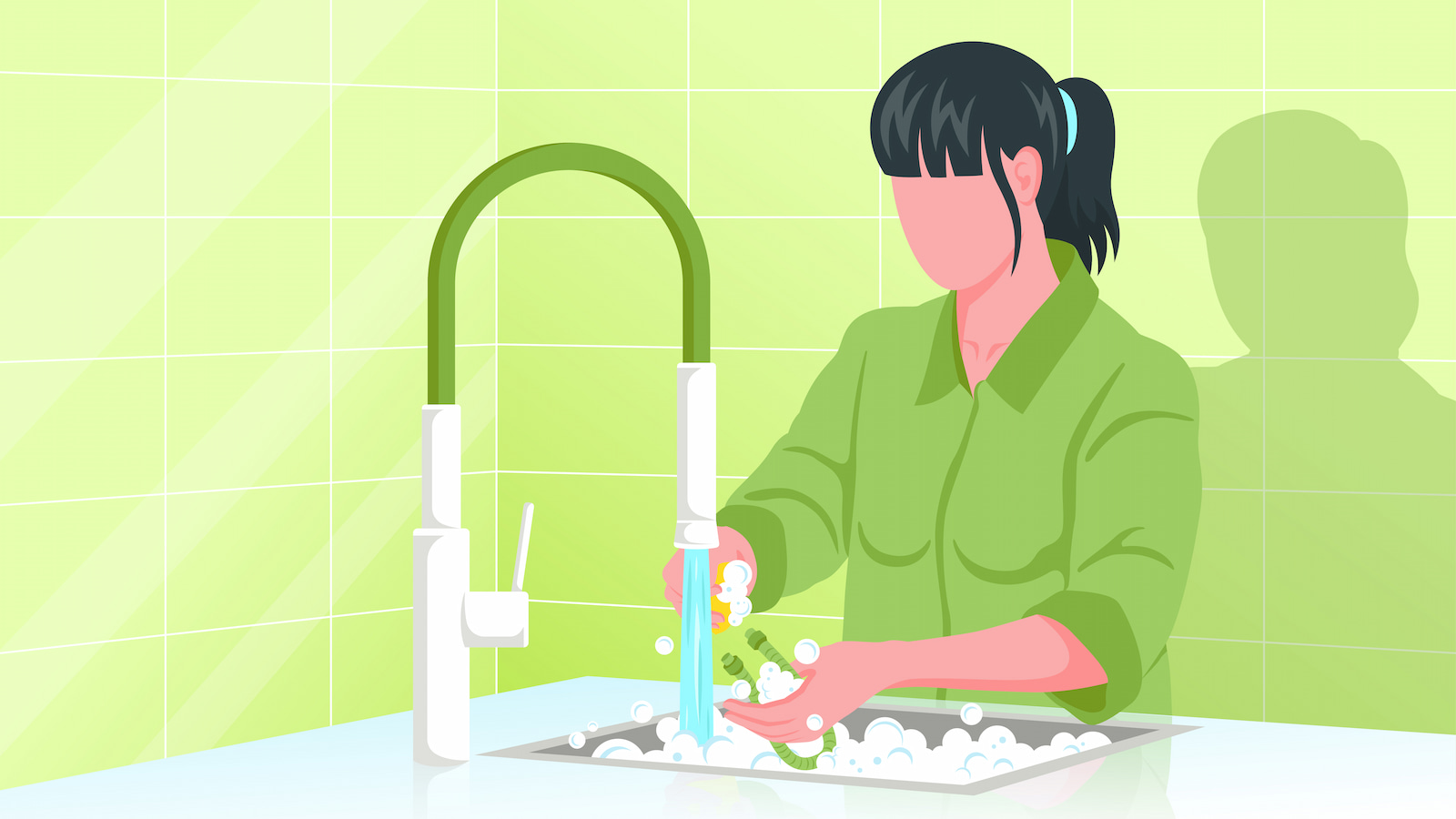
A CPAP pushes warm, humidified air through a sealed path into your airway for seven or eight hours a night. Every surface on that path, the mask cushion against your skin, the inside of the hose, the water chamber, is warm and damp by morning, which is the environment mould and bacteria like best. The Canadian Lung Association lists equipment care alongside mask fit as one of the basics of staying on therapy, and for good reason: a dirty setup causes most of the problems that make people quit.
Skipping the routine shows up as:
- Skin irritation and pressure sores from oil and residue on the cushion, and a seal that leaks because the silicone has gone slick
- Sinus and throat irritation, aggravated allergies, musty smells from the hose or chamber
- Mineral scale clouding the water chamber and coating the heater plate
- A machine that runs louder and works harder because the filter is clogged
- Parts that wear out early, and in some cases a manufacturer declining a warranty claim
If any of the part names below are unfamiliar, our guide to the parts of a CPAP machine has labelled diagrams of every component.
What You Need
Warm water, a mild unscented dish soap, a soft cloth, a towel or drying rack, and distilled white vinegar for the weekly chamber soak. That is the whole kit. Avoid scented soaps, moisturizing soaps, bleach, alcohol and anything with oils; they leave residue on silicone and can irritate your airway. That covers the basics. If you would rather spend less time at the sink, the tools in the section below handle the scrubbing for you; the routine is the same either way.
Daily: Two Minutes Every Morning
- Empty the water chamber. Pour out what is left, rinse with warm water and leave it open to dry. Never top up yesterday’s water; standing water is where growth starts. Use distilled water when you refill at night so minerals do not build up on the chamber or the heater plate.
- Wipe the mask cushion. Warm water and a drop of mild soap on a cloth, or a CPAP wipe, over any part of the mask that touches your face. Rinse and set it on a towel. This removes the skin oils that both break down the silicone and cause irritation.
- Let it air dry out of direct sun. Towel-drying leaves lint in the cushion; sun and heat age the silicone.
Weekly: Ten Minutes, Everything Comes Apart
- Unplug the machine and wipe the housing with a damp cloth. Never submerge the machine or let water near the air inlet or the power port.
- Take the mask apart. Separate the cushion, frame and headgear. Wash the cushion and frame in warm soapy water, rinse well, and check the exhalation vents for blocked holes. Wash the headgear by hand in warm water, not hot; heat and the dryer stretch the elastic. Our mask fit guide covers reassembly and re-tensioning.
- Soak the tubing. Fill the hose with warm soapy water, cover the ends and swish, soak for a few minutes, rinse until clear and hang it over the shower rail with both ends down to drain. A tube brush handles any film inside. Heated tubing is washed the same way; keep the electrical connector end dry and never submerge it.
- Soak the water chamber in one part white vinegar to three parts water for 20 to 30 minutes, then rinse thoroughly and air dry. The vinegar lifts mineral scale that soap will not. Check your manual first: some chambers are also dishwasher-safe on the top rack, and some are not.
- Rinse the reusable foam filter if your machine has one, squeeze it out and let it dry completely before it goes back in. A damp filter grows mould.
- Inspect as you go. Cracked tubing ribs, loose cuffs, a cushion that feels tacky, headgear that no longer holds tension, a chamber that has clouded: these are replacement signs, not cleaning problems.
Monthly and Beyond
- Check the disposable fine filter every two weeks and replace it when it looks grey, or every two to four weeks regardless. CPAP filters are specific to the machine model.
- Look at the whole setup once a month with the replacement table below in hand, so a worn part gets ordered before it fails.
- Once a year, have your pressure checked. Many clinics and suppliers will verify output with a manometer as part of a service visit, and it catches a machine that has drifted off its prescription.
- After a cold or flu, run the weekly routine daily until you are well. A mask you were sick in is a mask you can get sick from again.
UNLOCK OUR BEST OFFERS!
Get up to 40% off machines, masks and accessories only when you sign up!
Sign Up Free →Tools That Make the Routine Easier
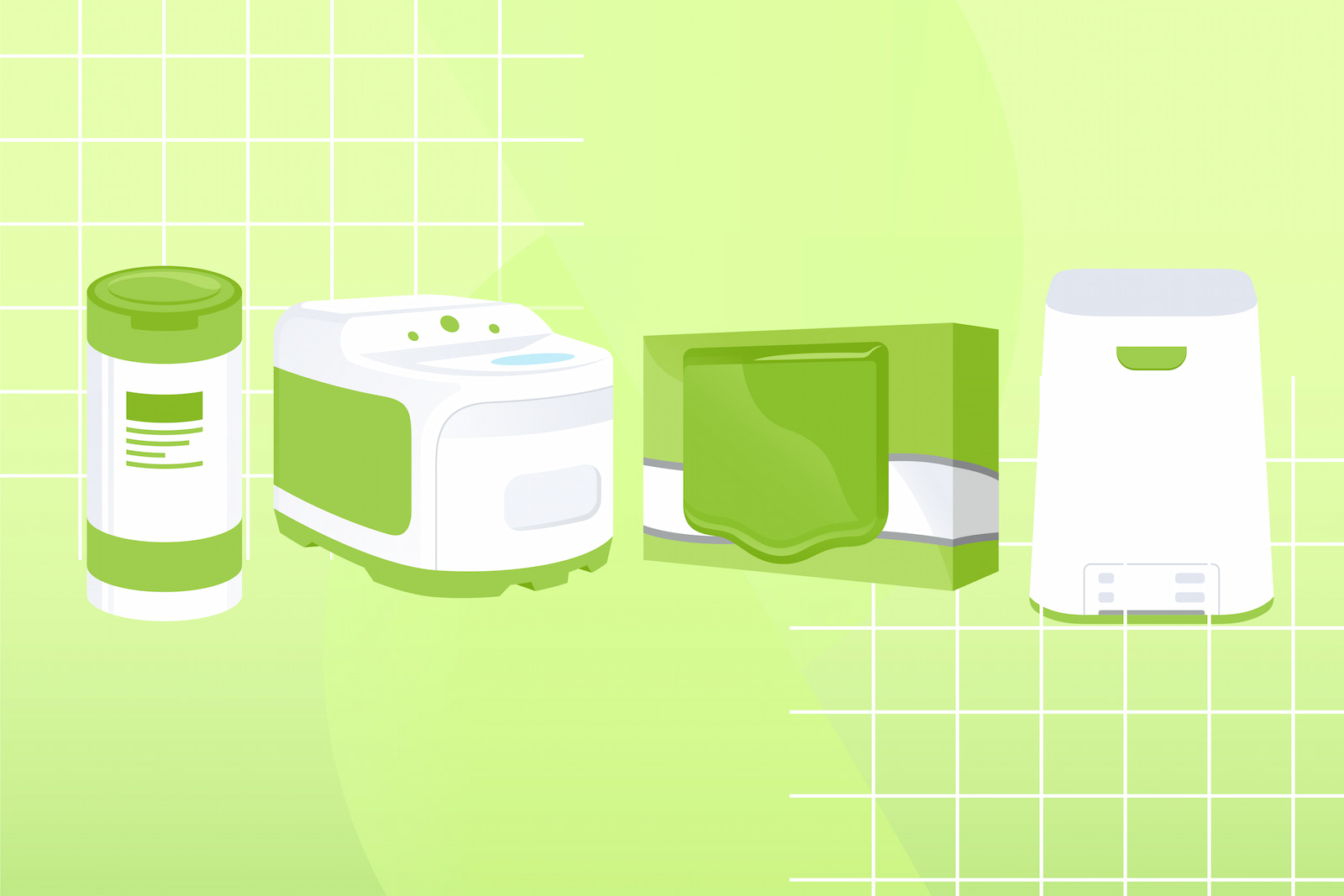
Soap and water do the work. These four tools do the parts of the routine people skip because they are awkward, and each one slots into a specific step above rather than replacing it.
| Tool | Which step it replaces | Why it helps |
|---|---|---|
| Citrus II CPAP wipes | Daily cushion wipe | Pre-moistened, no rinsing, no residue; the daily step with no sink |
| CPAPology Monty Elite tube brush | Weekly tubing soak | Long flexible brush sized for 15 mm and 22 mm hoses; clears film a soak alone leaves |
| CSpring DeepClean Wand MK2 | Weekly chamber scrub | Rechargeable, waterproof, four brush heads that reach chamber corners and seams |
| Lumin UV-C sanitizer | Added step after washing | Short UV cycle disinfects the washed mask, cushion and chamber; no chemicals, nothing to rinse |
Wipes are for the daily step. They remove the skin oil from the cushion the way soap does, dry in seconds, and are the difference between a routine that happens and one that gets skipped on busy mornings or in a hotel.
The tube brush and the chamber wand are for the weekly step. The two places people tell us they cannot get clean are the inside of the hose and the corners of the water chamber, because fingers and a cloth do not reach. A long tube brush and a cordless chamber brush fix both in a couple of minutes, and for anyone with limited grip or arthritis they are the difference between doing the weekly wash and not.
The Lumin is for after the wash, not instead of it. UV-C light disinfects surfaces it reaches, so once the cushion, frame and chamber are washed and dry, a cycle in the Lumin adds a sanitizing step with no chemicals and nothing to rinse. It does not remove oil or mineral scale, which is why it follows the wash rather than replacing it, and it is for the removable parts only; the machine itself never goes in.
What to skip: ozone-based “CPAP cleaners.” Health Canada has published safety information advising against ozone CPAP cleaning devices, which are not licensed for that use in Canada (you can check any device in the Health Canada recalls and safety alerts database), and ResMed and Philips Respironics both state that ozone exposure can degrade internal components and that the resulting damage is not covered under warranty. Residual ozone in a hose is also an airway irritant. We do not carry them.
Cleaning Versus Replacing: The Schedule
Cleaning keeps a part usable between replacements. It does not make a consumable last forever: silicone softens, elastic stretches, filters clog, chambers cloud. The intervals below are the ones Canadian insurers and our CPAP supplies pages work from; your plan’s replacement allowance usually matches them, so staying on schedule keeps both your therapy and your claims in order. Our guide to CPAP insurance in Canada explains how the allowances work, and everything in the tools section is in our CPAP cleaning supplies category.
| Part | Clean | Replace |
|---|---|---|
| Mask cushion or nasal pillows | Daily wipe, weekly wash | Every 1 to 3 months |
| Headgear | Weekly hand wash | Every 6 months |
| Mask frame | Weekly wash | Every 12 to 18 months |
| Water chamber | Daily rinse, weekly vinegar soak | Every 6 months |
| Tubing | Weekly soak | Every 3 to 6 months |
| Disposable fine filter | Do not wash | Every 2 to 4 weeks |
| Reusable foam filter | Weekly rinse | Every 6 months |
| Machine | Weekly wipe of housing | Around 5 years |
When the machine itself reaches the end of its life, our guide to CPAP machines in Canada compares the current models, and refurbished machines are the lower-cost route. For humidifier settings and the chamber itself, our CPAP humidifiers article goes deeper, and replacement chambers are in the humidifiers category.
Frequently Asked Questions
How often should I clean my CPAP machine?
Empty and rinse the water chamber and wipe the mask cushion every day. Wash the mask, headgear, tubing and chamber once a week. Check the filter every two weeks. Wipe the machine housing weekly and never submerge it.
What soap is safe for CPAP equipment?
A mild, unscented dish soap. Avoid moisturizing or antibacterial soaps, scented products, bleach, alcohol and anything oil-based; they leave residue on silicone and can irritate your airway.
Can I use vinegar to clean my CPAP?
Yes, for the water chamber and tubing: one part white vinegar to three parts water, soak 20 to 30 minutes, rinse thoroughly and air dry. Do not use vinegar on the mask cushion, which only needs soap and water, and keep it away from the machine itself.
Are ozone or UV CPAP cleaners safe?
They are different things. Ozone cleaners: Health Canada advises against them, they are not licensed for that use in Canada, and the major manufacturers warn that ozone damages the machine and voids the warranty. UV-C sanitizers such as the Lumin are a different category: they disinfect the removable parts after washing, with no gas and no chemicals, and the machine itself never goes in. Neither replaces soap and water, which is what removes oil and scale.
Can I put CPAP parts in the dishwasher?
Some water chambers are rated for the top rack; most masks, cushions and tubing are not. Check the manual for your specific chamber before trying it, and never put headgear or the machine in a dishwasher.
Why does my CPAP smell even after cleaning?
Usually one of three things: a filter that is overdue, a hose that was stored damp with the ends up so it never fully dried, or a chamber with scale under the cloudiness. Replace the filter, dry the hose hanging with both ends down, and give the chamber a vinegar soak. If the smell survives all three, the part is due for replacement.
Final Thoughts on CPAP Cleaning
Once you know how to clean a CPAP machine, two minutes in the morning and ten on the weekend keep it clean for years, and the two habits that matter most, emptying the chamber and changing the filter, take less time than reading this sentence. Clean on schedule, replace on schedule, and if the scrubbing is what stops you, let a brush or a wand do it.
If a part has reached the end of its life and you are not sure which one you need, send us a photo and we will match it. Call 1-855-492-3316 or email info@cpapsupply.ca, seven days a week from 9 AM to 9 PM. Orders over $150 ship free across Canada.
This guide is here for general information and is not a substitute for medical advice or for the care instructions in your equipment’s manual. Follow the manufacturer’s guidance for your specific machine, mask and humidifier, and talk to your care team if you develop skin, sinus or breathing irritation during therapy.