CPAP therapy is generally regarded as the primary treatment for obstructive sleep apnea. While it is effective for many individuals, some people experience different results with CPAP.
Some people develop breathing issues even while using CPAP. Others find the constant pressure uncomfortable or difficult to tolerate. If standard CPAP therapy isn’t working for you, your doctor might recommend ASV therapy instead.
ASV machines represent a more advanced form of positive airway pressure therapy. They’re designed for specific types of sleep apnea that don’t respond well to traditional CPAP treatment.
Understanding ASV vs CPAP can equip you to communicate more effectively with your healthcare provider about your treatment options.
What Is the Difference Between ASV and CPAP?
CPAP delivers a fixed air pressure throughout the night to keep the airway open and treat obstructive sleep apnea. ASV (adaptive servo-ventilation) monitors each breath, varies the pressure support breath by breath, and delivers a backup breath if you stop breathing. It treats central and complex sleep apnea, in which the problem lies in the brain’s breathing signal rather than a blocked airway.
The two machines look alike and use the same masks and tubing. The difference is in the algorithm. A CPAP has one job: keep the pressure at the level the prescription says. An ASV has a moving target: keep your breathing volume close to your recent average, adding support when it falls and easing off when it returns to your average. That is why ASV is a specialist prescription, and CPAP is a first-line one. The rest of this guide explains each therapy, compares them side by side, and covers how ASV is prescribed and funded in Canada.
What Is CPAP?
CPAP stands for Continuous Positive Airway Pressure.
A CPAP machine emits a continuous flow of pressurized air through a mask that fits over your nose or mouth while you sleep. This steady airflow keeps your airways open, helping to prevent the breathing interruptions characteristic of obstructive sleep apnea.
The pressure setting on a CPAP machine stays the same throughout the night.

Your sleep specialist determines this pressure based on your sleep study results. Once set, the machine delivers that exact pressure level continuously while you’re using it.
CPAP therapy is effective for most people with obstructive sleep apnea. Studies show it reduces daytime sleepiness, improves sleep quality, and may lower cardiovascular risks associated with untreated sleep apnea.
It’s the first-line treatment doctors prescribe for moderate to severe OSA.
In practice, most Canadians prescribed CPAP today receive an auto-adjusting machine (APAP) set either to a fixed pressure or to a range. The therapy is still CPAP; the hardware has changed. If you are weighing the standard therapy types against each other before you get to ASV, our guide to APAP vs CPAP vs BiPAP explains how fixed, auto-adjusting, and bilevel pressure differ and which one Canadians are usually dispensed.
What Is ASV?
ASV stands for Adaptive Servo-Ventilation.
It’s a form of noninvasive ventilation that tracks your breathing patterns throughout the night and adjusts air pressure automatically to match your needs.
Unlike CPAP machines, which deliver constant pressure, ASV machines use sophisticated algorithms to monitor your breathing.
When your breathing slows down or stops, the machine responds by increasing pressure to restore normal breathing. Once your breathing stabilizes, the ASV machine lowers the pressure back down.
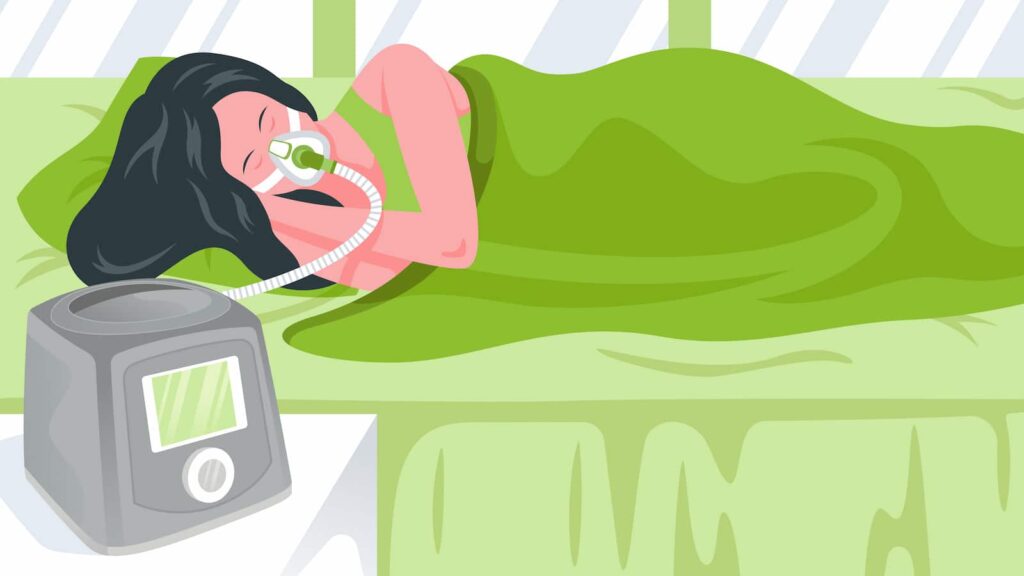
This adaptive approach makes ASV particularly effective for central sleep apnea (CSA).
In central sleep apnea, your brain temporarily fails to signal your respiratory muscles to breathe. ASV machines can detect these lapses and provide just enough pressure to initiate a breath, maintaining a regular breathing pattern throughout the night.
ASV therapy is also used for complex sleep apnea (also called treatment-emergent central sleep apnea). This condition develops when people with obstructive sleep apnea start experiencing central apnea events after beginning CPAP therapy.
Is ASV a Type of BiPAP?
ASV is built on bilevel technology, so it shares the two-pressure structure of a BiPAP machine: a lower expiratory pressure (EPAP) that holds the airway open and a higher inspiratory pressure (IPAP) that supports each breath in. The difference is that a standard BiPAP holds both pressures fixed, while an ASV constantly changes the gap between them, called pressure support, in response to how much air you are moving.
In a prescription, the distinction appears in the settings. A BiPAP prescription lists an IPAP and an EPAP, for example 16/10. An ASV prescription lists an EPAP (or an EPAP range), a minimum and maximum pressure support, and often a backup rate. Because of those extra parameters, an ASV prescription cannot be filled with a standard bilevel machine, and a BiPAP prescription should not be filled with an ASV. The two are not interchangeable even though the devices sit in the same product family.
How Do ASV Machines Work?
ASV machines have three basic components: a face mask, the machine itself, and a flexible hose connecting them. The setup looks similar to a CPAP system.
Here’s what makes ASV different. The machine continuously monitors your breathing throughout the night.
It tracks your breathing rate, the volume of each breath, and your overall breathing pattern.
When the machine detects that your breathing has slowed below your normal baseline, it automatically increases air pressure to bring you back to normal breathing levels.
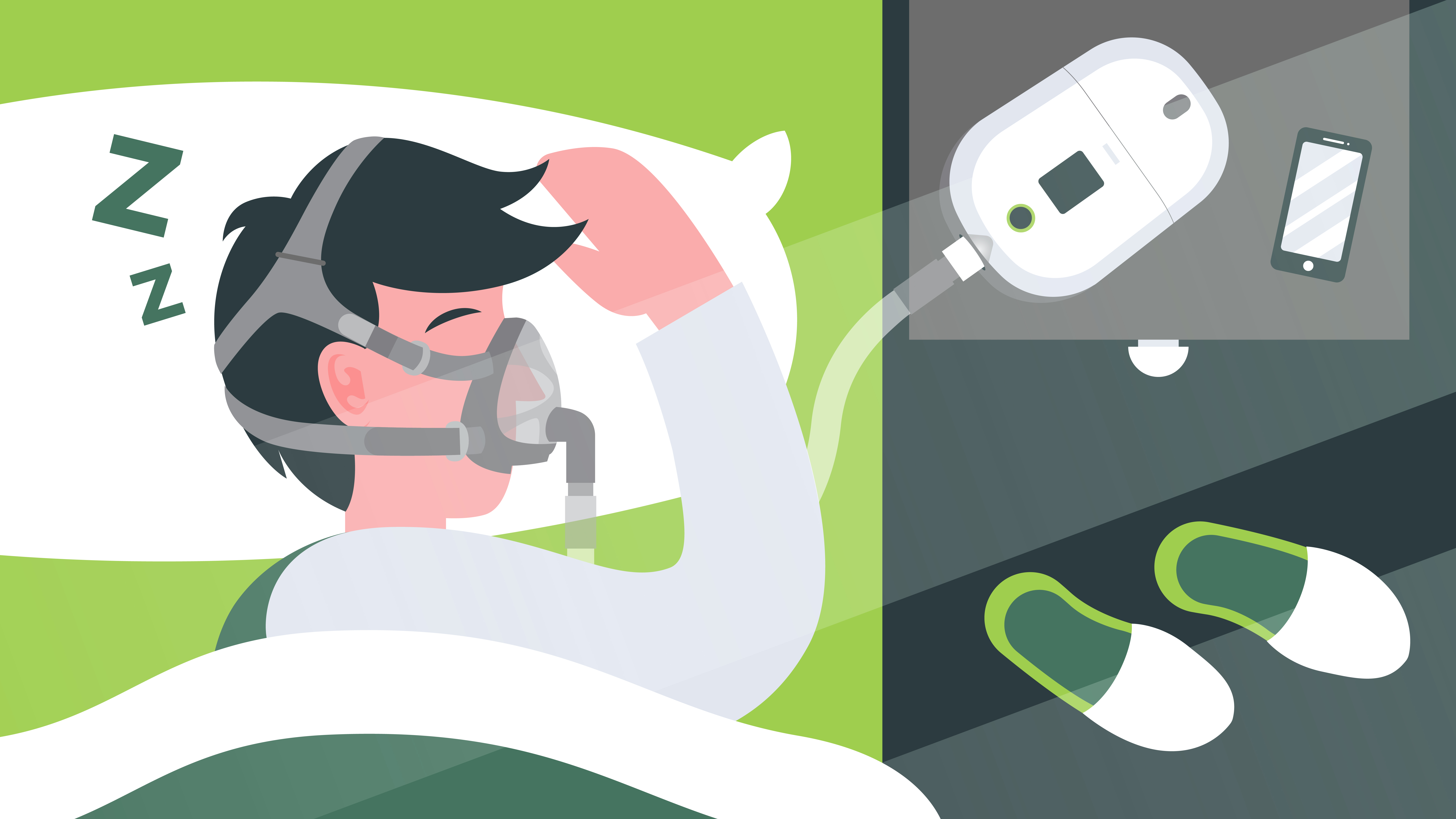
The adjustment happens in real time. The algorithms respond within seconds to changes in your breathing pattern.
This means you get more support when you need it and less pressure when you don’t.
ASV machines also include a backup respiratory rate. If you stop breathing for a certain number of seconds, the machine will mechanically deliver a breath.
This backup feature is particularly important for people with central sleep apnea, where the brain’s signal to breathe can fail.
The pressure support varies based on your individual breathing pattern.
Some ASV machines can even personalize the backup respiratory rate based on ongoing feedback from your breathing. This level of customization makes ASV more responsive than standard CPAP or BiPAP therapy.
A worked example makes the “baseline” idea concrete. Suppose your recent breathing averages a certain volume per minute. If the next few breaths come in shallow, the ASV raises pressure support on the following breath to bring the volume back toward that average. If no breath arrives within the backup interval, the machine delivers one. Once your own breathing returns, the extra support drops away within a breath or two. Because the target is your own moving average rather than a fixed number, the machine follows the natural rise and fall of your breathing through the night instead of fighting it.
When Is ASV Prescribed Instead of CPAP?
Doctors typically prescribe CPAP first for obstructive sleep apnea. ASV is reserved for specific situations where CPAP isn’t effective or appropriate.
Central sleep apnea is the most common reason for ASV prescriptions.
In CSA, breathing pauses happen because your brain doesn’t send proper signals to your breathing muscles. Standard CPAP can’t effectively address this neurological issue. ASV’s ability to detect breathing lapses and initiate breaths makes it better suited to central apnea.
Some people develop central sleep apnea after starting CPAP therapy. This is called treatment-emergent central sleep apnea or complex sleep apnea.
If you’re using CPAP and your sleep study shows you’re still having breathing pauses (but now they’re central rather than obstructive), your doctor may switch you to ASV.
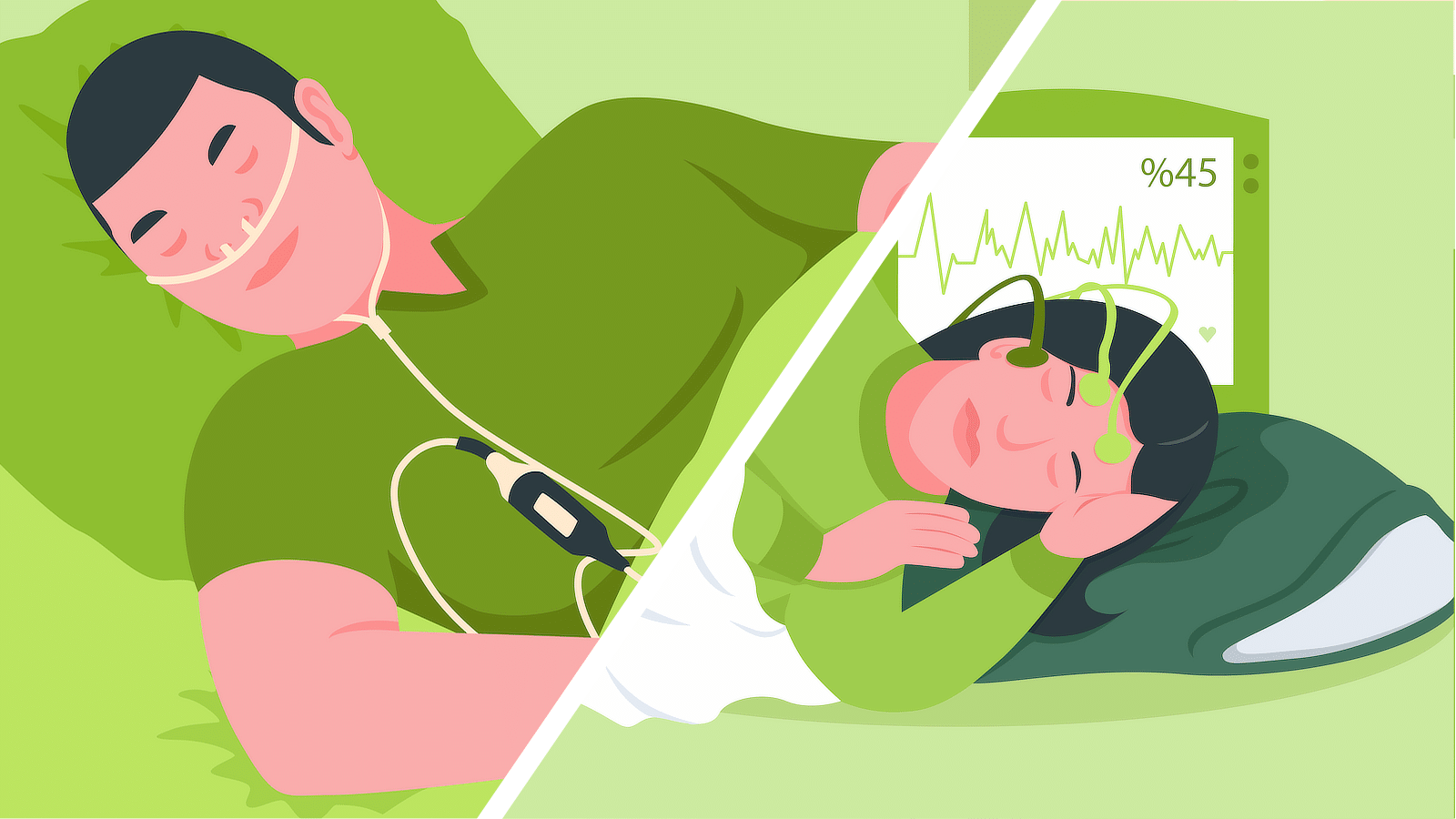
CPAP intolerance is another situation where ASV may be prescribed.
If you can’t tolerate CPAP therapy despite trying different masks, pressure adjustments, and humidification, your doctor may consider ASV.
Many people find ASV more comfortable because the pressure varies throughout the night instead of staying constant. The machine lowers pressure when you’re breathing normally, which can make exhalation feel more natural.
ASV was originally developed to treat Cheyne-Stokes respirations, a breathing pattern characterized by periods of hyperventilation followed by breathing lapses. This condition is often linked to heart failure. ASV can help stabilize this irregular breathing pattern.
Two other situations come up less often but are worth knowing. Opioid-induced central sleep apnea, where long-term opioid medication suppresses the breathing drive, is sometimes managed with ASV when other approaches fail. High-altitude periodic breathing can also produce central events, although this is usually managed differently. In both cases, the decision rests with a sleep specialist who has reviewed the full sleep study and medication history.
ASV vs CPAP: Key Differences
These two devices differ in several important ways.
| CPAP | ASV | |
|---|---|---|
| Pressure delivery | One fixed pressure all night | Pressure support changes breath by breath against your own breathing baseline |
| Inhale vs exhale | Same pressure both ways | Lower exhale pressure (EPAP), variable inhale support (IPAP) |
| Backup breath | No | Yes, delivered if you stop breathing for a set interval |
| Treats | Obstructive sleep apnea | Central sleep apnea, complex (treatment-emergent) sleep apnea, Cheyne-Stokes breathing |
| When prescribed | First-line for OSA | After CPAP fails or when a sleep study shows central events |
| Who prescribes | Physician or sleep specialist | Sleep specialist, after review of cardiac history |
| Contraindications | Few | Symptomatic heart failure with reduced ejection fraction; chronic hypoventilation; moderate to severe COPD |
| Relative cost | Lower | Highest of the PAP therapies |
| Prescription in Canada | Required | Required |
For pressure delivery, CPAP delivers constant pressure throughout the night, while ASV adjusts pressure continuously based on your breathing pattern.
CPAP maintains the same pressure whether you’re inhaling or exhaling, but ASV increases pressure when breathing slows and decreases pressure when breathing normalizes.
The devices are designed for different types of sleep apnea. CPAP is designed primarily for obstructive sleep apnea, while ASV is designed for central sleep apnea, complex sleep apnea, and specific breathing disorders. CPAP relies on constant pressure to keep airways open, but ASV can initiate breaths mechanically if you stop breathing for too long.
Many people find differences in comfort between the two devices.
CPAP delivers the same pressure during exhalation, which some people find uncomfortable. ASV lowers pressure during normal breathing, making exhalation feel more natural. This can reduce feelings of claustrophobia and may improve compliance for people who struggle with standard CPAP therapy.
Cost is another consideration. CPAP machines typically cost less, while ASV machines are more expensive.
In terms of when each is prescribed, CPAP is the first-line treatment for OSA. ASV is typically prescribed after CPAP hasn’t worked or for specific types of central apnea.
Is ASV Better Than CPAP?
Not for most people. ASV is better only when the diagnosis calls for it: central sleep apnea, complex sleep apnea, or Cheyne-Stokes breathing. For ordinary obstructive sleep apnea, CPAP or APAP treats the condition effectively at a fraction of the cost, and ASV adds no benefit. ASV also carries a contraindication for some heart failure patients that CPAP does not, so it is never a casual upgrade.
We occasionally hear from customers who have read that ASV is “the most advanced machine” and want one solely for comfort. If your sleep study shows obstructive events only, the better path is almost always an APAP with exhalation relief, a different mask, or heated humidification. Those changes resolve most CPAP comfort complaints. If they do not, a follow-up sleep study is the step that tells your specialist whether central events are present and whether ASV is the right answer.
Risks and Side Effects
ASV machines can cause side effects similar to other positive airway pressure devices.
Common side effects include dry mouth, nasal dryness, congestion, skin irritation from the mask, and eye irritation.
Using a humidifier with your ASV machine can help reduce symptoms such as dry mouth and nasal dryness.
Some people experience aerophagia (swallowing air), which can cause bloating or stomach discomfort.
Mask discomfort is another common issue, though finding the right mask type and ensuring proper fit can help.
ASV is not recommended for people with certain underlying conditions, including chronic hypoventilation, moderate to severe chronic obstructive pulmonary disease (COPD), or restrictive thoracic or neuromuscular disease.
Most importantly, ASV therapy is contraindicated for people with heart failure and reduced ejection fraction 45% or below.
Research has shown increased mortality risk in this population when using ASV. If you have heart failure, your doctor will carefully evaluate your ejection fraction before prescribing ASV therapy.
ASV Machines Available in Canada
The ASV device we stock is the ResMed AirCurve 11 ASV, which pairs adaptive servo-ventilation with a HumidAir heated humidifier. As part of ResMed’s Air11 series, it includes built-in cellular connectivity and the myAir app, along with comfort and support features such as exhalation relief and guided setup and troubleshooting. It is the current-generation ASV in ResMed’s Canadian line-up, replacing the earlier AirCurve 10 ASV. Because it is a specialist-prescribed device, we set it up from your prescription rather than from a default profile, and we will confirm the EPAP, pressure support range, and backup rate against the written order before shipping.
Pricing for ResMed machines is available to members once you are logged in. If you have an ASV prescription and want to compare it against other bilevel machines, our team can walk through what each device can and cannot do for your specific settings.
Getting an ASV Prescription in Canada
ASV machines are Class II medical devices regulated by Health Canada.
A valid prescription from a licensed healthcare provider is required to purchase an ASV machine, just as it is for CPAP devices.
If you think you may have sleep apnea, your family doctor can arrange a referral for a sleep study. If you’re already using CPAP and still experiencing symptoms, talk to your doctor or sleep specialist about whether ASV might be appropriate for you.
The diagnostic process typically involves a sleep study (either in-lab polysomnography or a home sleep apnea test, depending on your situation).
If your sleep study shows central sleep apnea, complex sleep apnea, or CPAP intolerance, your sleep specialist may prescribe ASV therapy.

Coverage for ASV machines varies significantly by province and insurance plan.
Some provincial health programs may cover a portion of ASV costs for eligible individuals, while others rely primarily on private insurance.
Some private plans may cover part of ASV costs when criteria are met. Coverage is variable and must be confirmed directly with the insurer.
ASV machines typically cost more than CPAP machines. If cost is a concern, discuss coverage options with your insurance provider and healthcare team. Some suppliers offer payment plans or can help with insurance claims.
Your respiratory therapist will work with you to set up your ASV machine and ensure proper mask fit. Ongoing follow-up appointments confirm your therapy is effective and provide opportunities to make any necessary adjustments.
Because ASV is a higher-cost device, insurers usually require more documentation than for CPAP. Expect to provide the sleep study report showing central or complex events, the specialist’s prescription with full ASV settings, and, in some cases, a letter explaining why standard CPAP or BiPAP was not adequate. Gathering those three documents before you submit a claim considerably shortens the approval time.
Frequently Asked Questions
What is an ASV machine?
An ASV (adaptive servo-ventilation) machine is a type of bilevel positive airway pressure device that monitors each breath and adjusts pressure support, breath by breath, to keep your breathing close to its recent average. It also delivers a backup breath if you stop breathing for a set interval. ASV is prescribed for central sleep apnea, complex sleep apnea, and Cheyne-Stokes breathing rather than for ordinary obstructive sleep apnea.
Is ASV the same as BiPAP?
No. Both use higher inhale pressure and lower exhale pressure, but a BiPAP holds those pressures fixed, while an ASV adjusts the pressure support continuously and adds a backup breath rate. The prescriptions are written differently, and the devices are not interchangeable.
Do I need a prescription for an ASV machine in Canada?
Yes. ASV devices are Class II medical devices under Health Canada rules and require a valid prescription. In practice, the prescription comes from a sleep specialist, because ASV settings and contraindications need specialist review. Masks and supplies do not require a prescription.
Who should not use ASV?
People with symptomatic heart failure and reduced left ventricular ejection fraction should avoid ASV, since research indicates a greater risk of death in this population. It is also not recommended for chronic hypoventilation, moderate to severe COPD, or restrictive thoracic and neuromuscular disease. Your specialist will review your cardiac history before prescribing it.
Does insurance cover ASV in Canada?
Coverage depends on your province and your private plan. Provincial programs that fund CPAP may fund ASV under different criteria or may not fund it at all, and private insurers generally require the sleep study report and full specialist prescription before approving a claim. Confirm coverage with your insurer before purchasing.
Can I use my CPAP mask with an ASV machine?
Usually yes. ASV machines use the same standard tubing connection and the same mask families as CPAP and APAP machines. Your respiratory therapist may recommend a full face mask if your central events are associated with mouth breathing, but there is no ASV-specific mask.
Unlock Our Best Offers!
Get up to 40% off machines, masks and accessories only when you sign up!
Sign Up Free →Next Steps
ASV therapy is an effective choice for treating central sleep apnea, complex sleep apnea, and other specific breathing disorders.
While CPAP remains the first-line treatment for obstructive sleep apnea, ASV provides an important alternative for people who need more adaptive pressure support.
If you’re struggling with CPAP therapy or have been diagnosed with central sleep apnea, talk to your sleep specialist about whether ASV might be right for you. Your doctor can evaluate your specific situation, review your sleep study results, and determine the most appropriate treatment option.
The most important thing is finding a therapy that works for you and that you’ll use consistently.
Whether that’s CPAP, ASV, or another form of positive airway pressure therapy, consistent use is key to managing sleep apnea and improving your overall health.
Related reading: APAP vs CPAP vs BiPAP compares the three standard therapy types, and EPAP vs CPAP covers the small machine-free valve devices sometimes suggested for mild obstructive sleep apnea.
Need help with CPAP equipment or accessories? The team at CPAP Supply can help you find masks, replacement parts, humidifiers, and other accessories to support your sleep apnea therapy. Reach out to us with questions about your equipment needs. We’re here to help Canadian CPAP users get the most from their therapy.
Medical Disclaimer
This information is provided for educational purposes only and should not be interpreted as medical advice, diagnosis, or treatment. CPAP and ASV therapy must be prescribed and supervised by a licensed healthcare provider following a confirmed diagnosis of sleep apnea through proper testing. Always seek advice from your physician or sleep specialist with questions about your symptoms or treatment options. Nothing here creates a doctor-patient relationship. Always follow professional medical advice and seek timely treatment, regardless of any information presented here. CPAP and ASV machines require a valid Canadian prescription before purchase.