Clean CPAP equipment protects your health and keeps your therapy working the way it should. This guide covers how to clean your CPAP machine, mask, and tubing, with CPAP cleaners and sanitizers. What the automatic cleaning devices sold in Canada do and do not do, and how to decide whether you need one. It follows Canadian guidance and manufacturer instructions throughout.
Cleaning is one of the questions we field most at the store, usually right after someone asks which mask fits best. I understand why it feels fraught. The marketing around sanitizing gadgets can make a basin, a little soap, and ten minutes seem inadequate for a medical device. It is not.
The equipment that comes back to us in the best shape, years into daily use, belongs to people who kept up a plain weekly wash. The gadget on the shelf matters much less than the habit. I would rather send you home sure of a routine that works than sell you something you do not need.
Unlock Our Best Offers!
Get up to 40% off machines, masks and accessories only when you sign up!
Sign Up Free →Why Cleaning Your CPAP Matters
Every night, your mask, tubing, and humidifier chamber are exposed to warm, moist air, along with the natural oils from your skin and the moisture you breathe out. That warm and damp environment is where bacteria and mould can grow if equipment is left dirty or damp. Studies of home CPAP equipment have recovered bacteria from tubing and humidifier chambers, which is part of why regular cleaning and thorough drying are recommended.
You do not need to sterilize your equipment like an operating room. A consistent, gentle cleaning routine that keeps oils, moisture, and residue from building up is plenty. Clean equipment also lasts longer, seals better against your face, and smells fresher, all of which make therapy easier to stick with.
The Foundation: Manual Cleaning Done Right
No matter what else you use, hand cleaning with mild soap and warm water is the method every major manufacturer recommends in its user guide, and it remains the gold standard.
Manufacturers such as ResMed advise cleaning mask parts with a mild liquid soap and warm, drinking-quality water, rinsing thoroughly, and air-drying away from direct sunlight. Fisher and Paykel and Löwenstein give very similar guidance, so the instructions that came with your own equipment should always be your first reference.
The routine I give customers at the store splits into daily and weekly steps.
Every day
Wipe down the cushion that touches your face. Facial oils break down the silicone over time and hurt the seal, so a quick daily wipe with a soft cloth or a CPAP-safe wipe keeps the fit tight. Empty any water left in your humidifier chamber, rinse it, and let it air-dry so it is ready for fresh water at night.
Every week
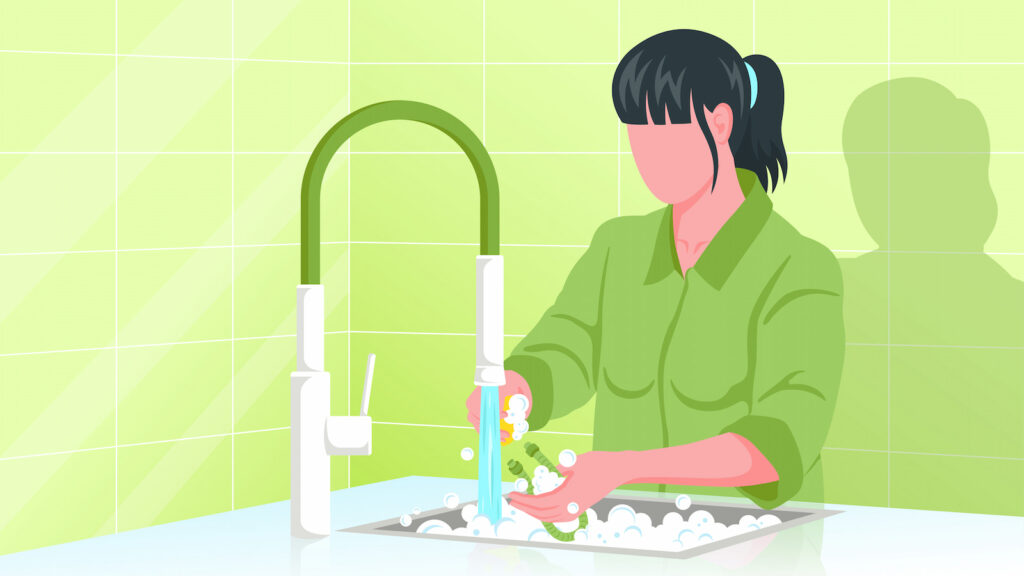
Give the mask, cushion, headgear, tubing, and humidifier chamber a proper wash. Use a small amount of mild, fragrance-free liquid dish soap and warm water. Swish soapy water through the tubing, rinse everything well, and hang the tubing to drip-dry over a shower rail or towel bar. Lay soft parts on a clean towel out of direct sunlight.
A few cautions that matter
Avoid antibacterial soaps, alcohol, bleach, and strongly scented cleaners. These can damage mask silicone, cause cracks, or leave a residue you do not want to breathe, which is why manufacturers steer you toward mild soap only. Never put CPAP parts in a dishwasher or washing machine, and never submerge the machine itself. To wipe down the outside of the machine, unplug it first and use a lightly damp cloth only.
If you want CPAP cleaning products made for the job, our CPAP cleaning supplies collection includes gentle options such as Citrus II CPAP cleaning wipes and Contour CPAP mask wipes for quick daily upkeep between deeper washes.
A Word About Water
Humidifier water deserves its own note. Distilled water is the safest choice because it leaves no mineral scale in the chamber and carries fewer impurities than tap water. Many Canadians use tap water and are fine, but if your water is hard, you will see mineral buildup faster, and that residue is difficult to clean. Empty the chamber each morning rather than topping it up, and wash it weekly. If you notice white crusty deposits, distilled water and a weekly wash will usually solve it.
Automatic CPAP Cleaners: What They Are and How They Work
Automatic CPAP cleaners promise to sanitize your equipment without scrubbing. They fall into two categories, and the difference matters before you decide whether one fits your routine.
Activated Oxygen (Ozone) Sanitizers
Ozone-based sanitizers, sometimes marketed as “activated oxygen” cleaners, work by generating ozone gas inside a sealed chamber or bag to reduce microbes on your equipment. The chamber holds the ozone during the cycle, and you wait for it to clear before using your equipment again.
There are two things every Canadian should understand before buying one.
First, ozone is a respiratory irritant. Health Canada advises against using devices that intentionally generate ozone in the home, noting that ozone can cause coughing, chest discomfort, and irritation of the nose and throat, and that people with underlying breathing conditions are more sensitive to it. Health Canada has also published a residential indoor air quality guideline for ozone. Health Canada’s guidance targets ozone-generating air cleaners meant to run in living spaces, and a sealed-chamber CPAP sanitizer is a different setup. The caution about ozone exposure is still why these units contain the gas and ask you to wait after a cycle before use.
Second, ozone can affect your CPAP machine’s warranty. ResMed’s limited warranty excludes damage caused by the use of ozone cleaning devices, and ResMed has noted that repeated ozone exposure may eventually cause internal wear such as increased motor noise. If you are considering an ozone sanitizer, check the warranty terms for your specific machine first.
UV Light Sanitizers
Ultraviolet (UV-C) sanitizers use light rather than gas to reduce microbes on the surfaces that the light can reach. Products in this category include the Lumin CPAP cleaner, which uses a UV chamber, and the CSpring DeepClean wand, a handheld UV device. UV sanitizers do not use ozone, so they avoid the ozone warranty concern. However, you should still confirm your own machine’s terms, since manufacturers generally treat UV devices separately from ozone devices.
The Limitation Both Types Share
Neither ozone nor UV cleaners remove the physical debris that builds up on your equipment. They do not wash away skin oils, dust, or mineral deposits. Their job is to reduce microbes, not to scrub off residue. That is why no automatic cleaner replaces hand washing. Whichever device you choose, keep it as an add-on to your weekly wash rather than a stand-in for it.
You can browse the full range in our CPAP cleaning supplies and CPAP accessories sections.
Do You Need an Automatic Cleaner?
For most people, a manual routine is enough, and it is the foundation I recommend for everyone. An automatic sanitizer can be a helpful convenience for some, for example someone with limited hand mobility who finds daily washing difficult, or a frequent traveller who wants a quick touch-up option. If that is you, choose the type that fits your comfort with the trade-offs above, follow the manufacturer’s instructions exactly, and keep hand washing in your weekly routine anyway.
If you are unsure, our team is always happy to talk it through with you before you spend a dollar.
Your Weekly Cleaning Schedule
A schedule worth keeping:
Daily: wipe the mask cushion, empty and rinse the humidifier chamber, and let the parts air-dry.
Weekly: wash the mask, headgear, tubing, and humidifier chamber in mild soap and warm water, rinse well, and air-dry out of direct sunlight.
Monthly: check your filters and replace disposable ones as directed in your machine’s guide. You can find replacements in our CPAP filters collection.
Every few months: replace cushions and other wear items on the schedule your manufacturer recommends, since even well-cleaned silicone loses its seal over time.
Unlock Our Best Offers!
Get up to 40% off machines, masks and accessories only when you sign up!
Sign Up Free →Frequently Asked Questions CPAP Cleaners and Sanitizers
How often should I clean my CPAP mask and tubing?
Are ozone or UV CPAP cleaners safe to use in Canada?
Will an automatic cleaner void my machine’s warranty?
Can I use vinegar, bleach, or antibacterial soap?
Should I use distilled or tap water in my humidifier?
Do I still need to replace parts if I clean everything well?
Final Thoughts on Keeping Your CPAP Clean
A gentle, consistent routine of soap and warm water is the core of good CPAP hygiene, and for most people it is all they need. Automatic sanitizers can add convenience, and the ozone options come with cautions worth understanding first. The most important thing to remember is simple. If you choose to use one, treat it as a supplement to your regular soap-and-water routine, never as a substitute.
If you would like help choosing cleaning CPAP supplies, deciding whether a sanitizer makes sense for you, or finding the right replacement parts, our CPAP specialists are glad to help. Our team is available seven days a week from 9 AM to 9 PM at 1-855-492-3316, or email [email protected]. Free Canadian shipping applies to every order over $150, and we ship to every province and territory.
This guide is here for general information and is not a substitute for medical advice. Make sure to adhere to the cleaning and maintenance instructions in your equipment’s user guide, and consult your healthcare team or a registered respiratory therapist if you have questions about your CPAP therapy, an infection concern, or your specific machine.