If you’re living with sleep apnea, you know the nightly routine. The mask. The tubing. The humming machine on your nightstand. It’s effective, but it’s not exactly convenient for travel or discreet for overnight guests.
That’s why the idea of micro CPAP devices sounds so appealing.
Imagine a tiny, maskless device that fits in your nose and delivers effective sleep apnea treatment without all the equipment. No wonder these products have gained attention.
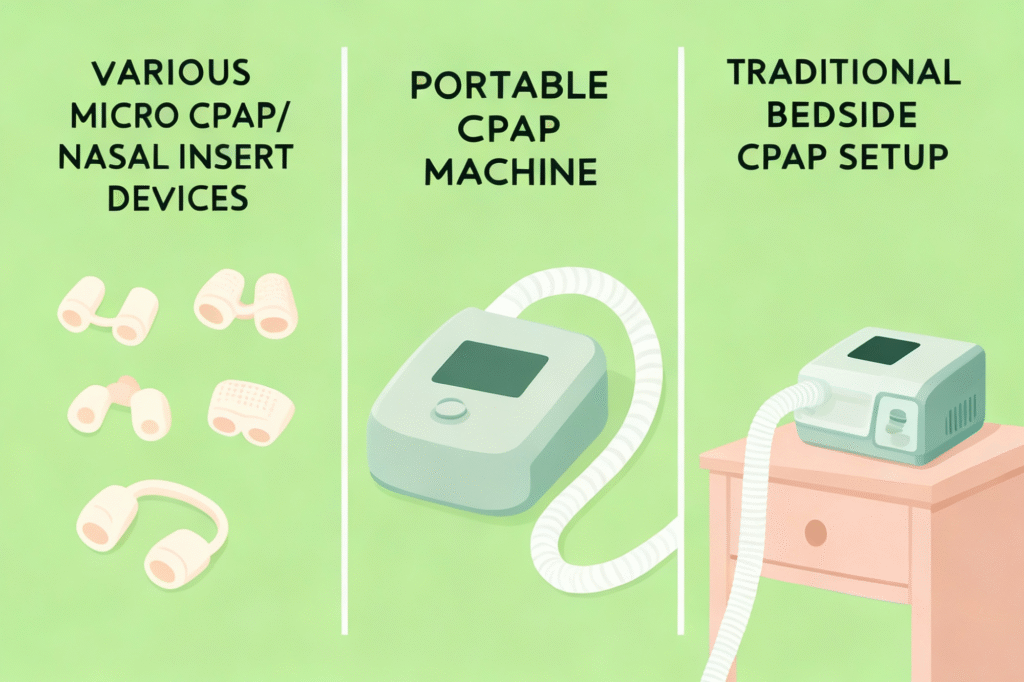
But here’s what you need to know. Most devices marketed as micro CPAP don’t work the same way as traditional CPAP therapy. Many lack FDA approval. And the clinical evidence supporting their effectiveness is limited or nonexistent.
That doesn’t mean compact, portable CPAP solutions don’t exist. They do.
But understanding the difference between unproven gadgets and legitimate portable CPAP machines can save you money, frustration, and potentially your health.
What Are Micro CPAP Devices?
The term micro CPAP typically refers to small, portable devices that claim to treat sleep apnea without the mask, tubing, and bedside machine of traditional CPAP therapy.
Most of these devices are marketed as:
- Maskless (fitting in or around the nostrils)
- Portable and travel-friendly
- Quieter than traditional CPAP
- More discreet for social situations
- Battery-powered with no external equipment
Some products position themselves as alternatives to CPAP therapy. Others claim to reduce snoring or improve sleep quality without explicitly calling themselves medical devices.
The appeal is obvious.
If you travel frequently, sleep in different locations, or simply want a less intrusive solution, a device that fits in your pocket sounds ideal.
How Do They Claim to Work?
Most micro CPAP devices use one of these approaches:
- Nasal inserts with micro-pumps: Small devices that fit into the nostrils and use tiny pumps to create positive airway pressure. The idea is to deliver pressurized air directly into your nasal passages to keep airways open.
- Expiratory positive airway pressure (EPAP) devices: These create resistance when you exhale, which helps keep your airways from collapsing. They don’t actively pump air like traditional CPAP.
- Vibration or air circulation: Some devices claim to improve airflow through vibration or gentle air circulation, though the mechanism for preventing apnea events isn’t always clear.
The problem? Most of these mechanisms haven’t been proven to deliver the consistent, calibrated positive airway pressure that traditional CPAP therapy provides.
The FDA Approval Issue
Here’s the critical distinction. CPAP therapy is a medical treatment for obstructive sleep apnea.
In Canada and the United States, CPAP machines are regulated medical devices that require FDA approval and, in Canada, a valid prescription.
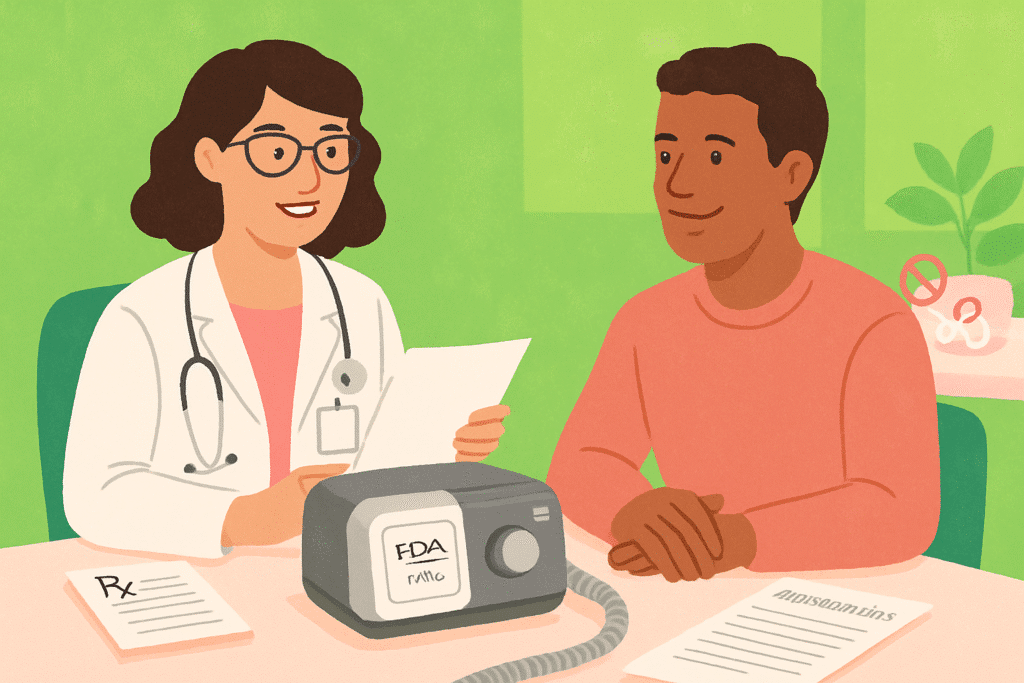
Most micro CPAP devices sold online are not FDA-approved for treating obstructive sleep apnea.
Some aren’t even classified as medical devices. They may be marketed as anti-snoring devices or sleep aids to avoid medical device regulations.
This matters because:
- Without FDA approval, there’s no regulatory oversight ensuring the device is safe or effective
- Clinical trials demonstrating efficacy for sleep apnea treatment are typically absent
- You may be spending money on a product that doesn’t deliver therapeutic pressure
- Using an unproven device instead of prescribed CPAP therapy can leave your sleep apnea untreated
Untreated sleep apnea is associated with serious health risks such as cardiovascular disease, stroke, and daytime impairment.
Using an ineffective device isn’t just a waste of money. It’s a health risk.
What the Evidence Shows
The clinical evidence for most micro CPAP devices is limited or nonexistent.
Sleep medicine professionals and patient advocacy organizations have raised concerns about these devices. The American Sleep Apnea Association notes that many micro CPAP products lack the clinical validation that traditional CPAP therapy has.
Some devices using EPAP technology (like Theravent) have limited evidence supporting their use for mild sleep apnea.
But these aren’t micro CPAP devices in the traditional sense. They’re passive valves that create resistance during exhalation, not active positive airway pressure devices.
The bottom line: CPAP therapy works because it delivers consistent, calibrated positive airway pressure throughout the night. Most micro CPAP devices can’t replicate that mechanism.
Legitimate Portable CPAP Options
The good news? If you want portable, compact CPAP therapy that actually works, it exists.
Several manufacturers make legitimate CPAP machines that are much smaller and lighter than traditional models. These devices are FDA-approved, clinically proven, and deliver the same therapeutic pressure as full-size machines.

Transcend Micro Auto CPAP
The Transcend Micro Auto CPAP is one of the smallest, most portable CPAP machines available. It weighs just 0.22 kg and fits in the palm of your hand.
But unlike unproven micro CPAP gadgets, the Transcend is a real CPAP machine. It delivers auto-adjusting positive airway pressure based on your breathing patterns throughout the night.
It’s FDA-approved. It requires a prescription. And it works with standard CPAP masks.
Key features include:
- Compact size: Weighs just 0.22 kg, roughly the size of a smartphone
- Auto-adjusting pressure: Detects your needs and adjusts pressure automatically
- Battery option: Rechargeable battery pack for camping or power outages
- Integrated humidification: Optional AirMist HME (Heat Moisture Exchanger)
- TSA-friendly: Approved for airline carry-on
The Transcend doesn’t eliminate the need for a mask. But it delivers proven therapy in a package small enough to fit in your carry-on or glove compartment.
Other Portable CPAP Options
Other manufacturers offer compact CPAP machines designed for travel:
ResMed AirMini auto-adjusting CPAP machine: Another ultra-portable auto-adjusting CPAP machine with smartphone connectivity and a compact design. It works with select ResMed masks.
Z2 Auto Travel CPAP: Lightweight and quiet with optional integrated battery and humidification.
These devices share key characteristics:
- FDA-approved for treating obstructive sleep apnea
- Deliver calibrated positive airway pressure
- Work with standard CPAP masks
- Require a prescription
- Backed by clinical evidence
They may not be as small as a maskless micro CPAP, but they deliver therapy that actually works.
How to Choose a Portable CPAP That Actually Works
If you’re looking for a more portable CPAP solution, here’s how to evaluate your options:
Check FDA approval. Legitimate CPAP devices are FDA-approved medical devices. If a product isn’t approved, it’s not a proven treatment for sleep apnea.
Look for clinical evidence. Reputable manufacturers publish clinical data demonstrating their devices effectively treat sleep apnea. If a company can’t provide evidence, that’s a red flag.
Verify prescription requirements. In Canada, CPAP machines require a valid prescription. If a device is sold without requiring a prescription, it’s not regulated as a medical device and likely isn’t effective.

Consider compatibility. Does the device work with standard CPAP masks? If it requires proprietary components or no mask at all, ask how it delivers therapeutic pressure.
Talk to your sleep specialist. Before switching to any new device, consult your healthcare provider. They can help you choose a portable CPAP option that meets your prescribed therapy needs.
Read independent reviews. Look for reviews from respiratory therapists, sleep medicine professionals, and verified patients. Be wary of marketing claims without third-party validation.
If you want to learn more about choosing the right travel CPAP for your needs, we’ve put together a comprehensive guide to help you evaluate features and find the best portable option for your situation.
When Portable CPAP Makes Sense
Legitimate portable CPAP machines are ideal for:
- Frequent travelers: If you travel regularly for work or leisure, a compact machine makes therapy easier to maintain on the road.
- RV and camping enthusiasts: Battery-powered CPAP machines let you maintain therapy off-grid.
- Split-time living: If you divide time between two homes, keeping a portable CPAP at your second location can be more convenient than transporting your primary machine.
- Backup device: Some patients keep a portable CPAP as a backup in case their primary machine needs service.
- Discreet therapy: Smaller machines can be less conspicuous for patients who feel self-conscious about CPAP equipment.
What portable CPAP isn’t: a way to eliminate the need for a mask or avoid prescribed therapy settings. Effective CPAP therapy requires consistent pressure delivery, and that means using a mask.
Why Traditional CPAP Remains the Gold Standard
It’s worth understanding why traditional CPAP therapy works so well.
CPAP machines deliver continuous positive airway pressure that keeps your airways open throughout the night. The pressure is calibrated to your specific needs based on a sleep study. The mask creates a seal that ensures consistent pressure delivery.
This simple mechanism is backed by decades of clinical research. CPAP therapy is the first-line treatment for moderate-to-severe obstructive sleep apnea. The Canadian Thoracic Society and sleep medicine organizations worldwide recommend this approach.

Most patients see significant improvement in sleep quality, daytime alertness, and overall health when they use CPAP therapy consistently.
The challenge isn’t that CPAP doesn’t work. It’s that consistent use requires adjustment and commitment. The equipment can feel cumbersome. The mask takes getting used to. Travel adds complexity.
But these are challenges that can be solved with the right equipment, proper mask fitting, and support from your respiratory therapist.
Switching to an unproven device isn’t the answer.
If you’re struggling with traditional CPAP, talk to your healthcare provider. Options like different mask styles, heated humidification, pressure adjustments, or portable CPAP machines can address many common concerns without sacrificing effective therapy.
What About Anti-Snoring Devices?
Some products marketed as micro CPAP are actually anti-snoring devices, not sleep apnea treatment.
Snoring and sleep apnea are related but different conditions. Snoring is the sound of vibrating tissues in your airway. Sleep apnea is the repeated stopping and starting of breathing during sleep.
Anti-snoring devices may reduce snoring by:
- Keeping nasal passages open
- Positioning the jaw forward
- Creating resistance during breathing
These mechanisms might help with simple snoring, but they don’t treat obstructive sleep apnea. If you have diagnosed sleep apnea, anti-snoring devices aren’t a substitute for prescribed CPAP therapy.
Using an anti-snoring device when you need CPAP therapy leaves your condition untreated. That means you’re still experiencing apnea events, oxygen desaturation, and fragmented sleep, even if the snoring is quieter.
Frequently Asked Questions
Are micro CPAP devices as effective as traditional CPAP?
No. Most devices marketed as micro CPAP lack FDA approval and clinical evidence of effectiveness. Legitimate portable CPAP machines like the Transcend Micro Auto CPAP are as effective as traditional CPAP because they deliver the same therapeutic pressure in a smaller package.
Do I need a prescription for a micro CPAP device?
Legitimate CPAP machines, including portable models, require a prescription in Canada. If a device is sold without requiring a prescription, it’s not regulated as a medical device and likely isn’t effective for treating sleep apnea.
Can I use a micro CPAP device instead of my prescribed CPAP therapy?
You should never discontinue prescribed CPAP therapy without consulting your healthcare provider. Most micro CPAP devices are not approved for treating sleep apnea and won’t provide effective therapy. If you’re interested in a portable CPAP option, talk to your sleep specialist about FDA-approved alternatives like the Transcend Micro Auto CPAP.
What’s the difference between a micro CPAP and a portable CPAP machine?
Micro CPAP typically refers to unproven devices that claim to treat sleep apnea without a mask or traditional equipment. Portable CPAP machines are legitimate, FDA-approved CPAP devices that are simply smaller and lighter than traditional models. Portable CPAP machines deliver proven therapy. Most micro CPAP devices do not.
Are there any maskless CPAP options that actually work?
Currently, no maskless devices have the clinical evidence and FDA approval that traditional CPAP therapy has. Effective CPAP therapy requires a mask to create the seal needed for consistent pressure delivery. Some patients find nasal pillow masks less intrusive than full-face masks, which may feel less restrictive while still providing proven therapy.
Final Thoughts
The promise of a smaller, simpler sleep apnea solution is appealing. But when it comes to your health, proven therapy matters more than convenience alone.
Most micro CPAP devices lack the FDA approval and clinical evidence needed to ensure they’re treating your sleep apnea effectively. Legitimate portable CPAP machines like the Transcend Micro Auto CPAP offer the best of both worlds: compact, travel-friendly design with proven therapeutic effectiveness.
If you’re interested in exploring portable CPAP options, reach out to your CPAP supply provider or sleep specialist. They can help you understand which devices are right for your prescribed therapy needs and answer questions about compatibility, coverage, and setup.
Your sleep apnea treatment should work with your lifestyle, not against it. With the right equipment and support, you can maintain effective therapy whether you’re at home or on the road.
Medical Disclaimer
The information provided is for educational purposes only and is not medical advice, diagnosis, or treatment. CPAP therapy should only be used under the direction of a licensed healthcare provider who has diagnosed obstructive sleep apnea through appropriate testing. Always seek advice from your physician or sleep specialist with questions about your symptoms or treatment options. Nothing here creates a doctor-patient relationship. Do not disregard professional medical advice or delay seeking treatment based on content here. Our products require a valid Canadian prescription before purchase.